Getting a good reference photo
Any camera works. Here is what makes a photo easy for us to turn into a portrait.
What should be in the frame?
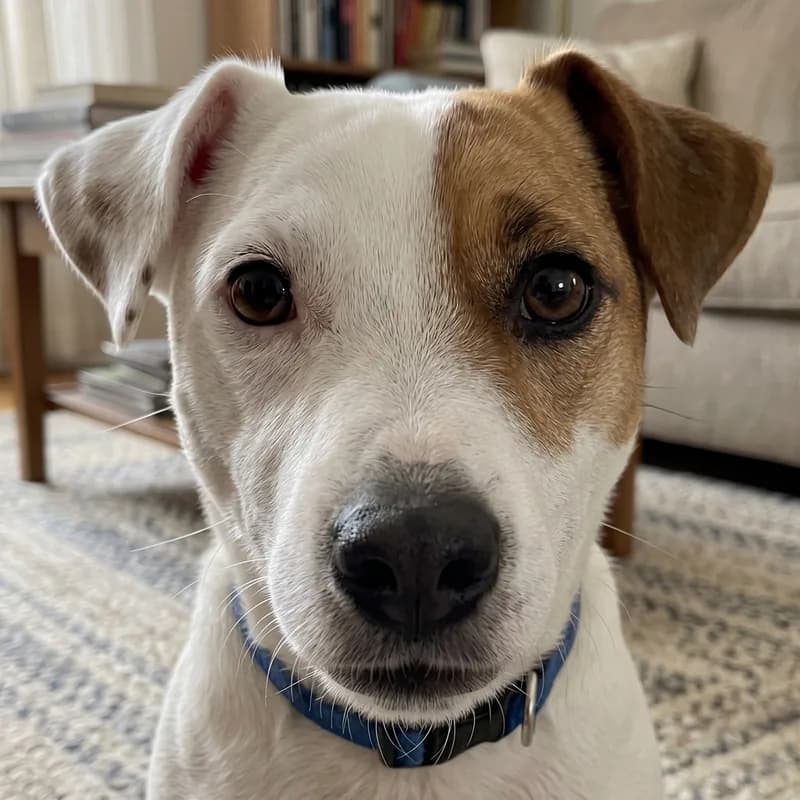
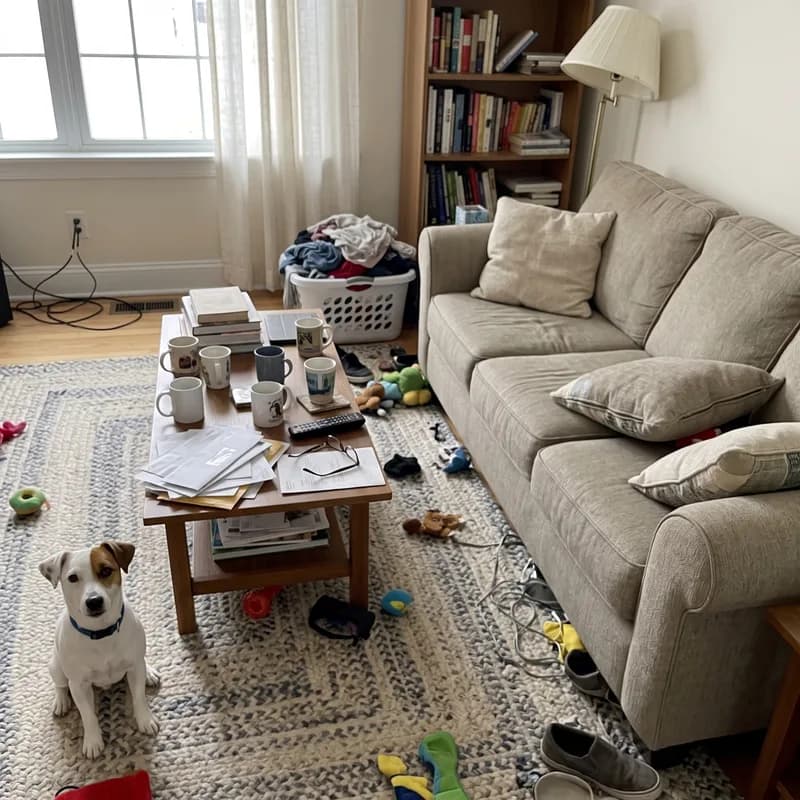
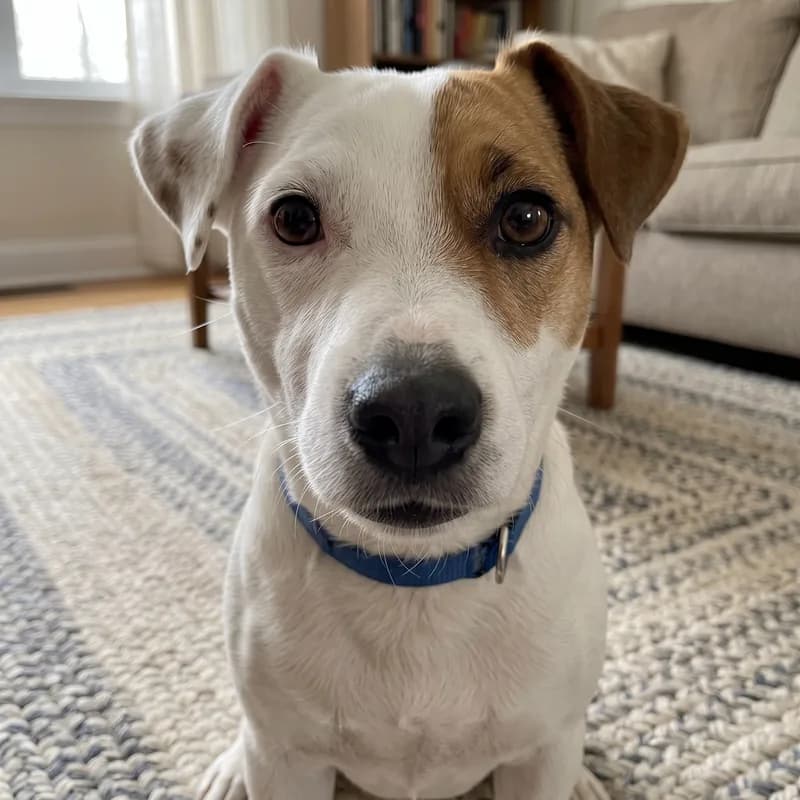
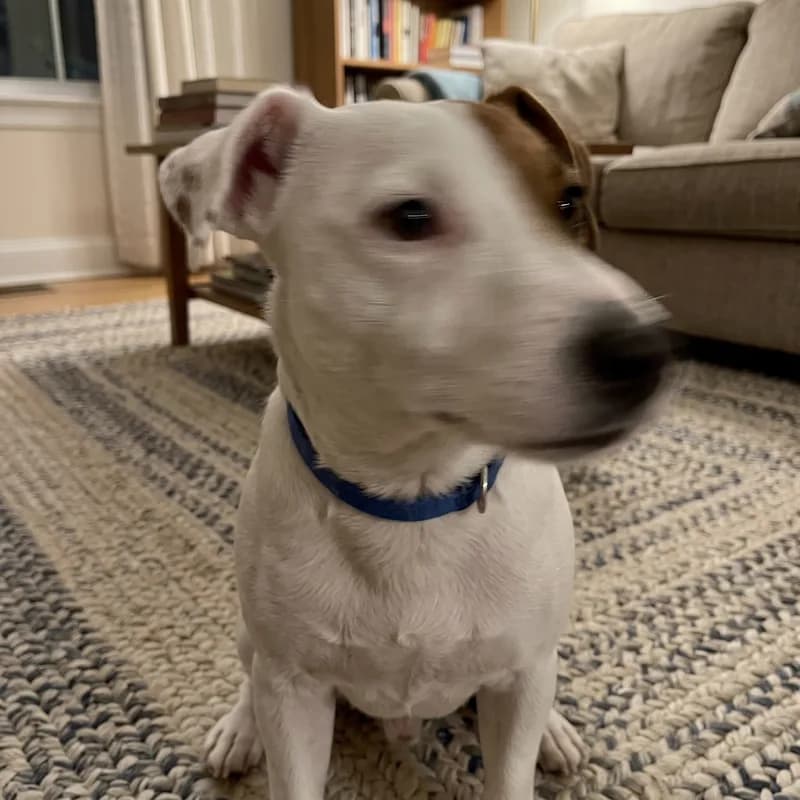
Fill the frame with your pet's face and shoulders, the way the first photo here does. A photo taken from across the room, like the one beside it, leaves too little detail for a clear likeness. Step closer, or zoom with your feet rather than the camera, before you tap the shutter.
What kind of light works best?
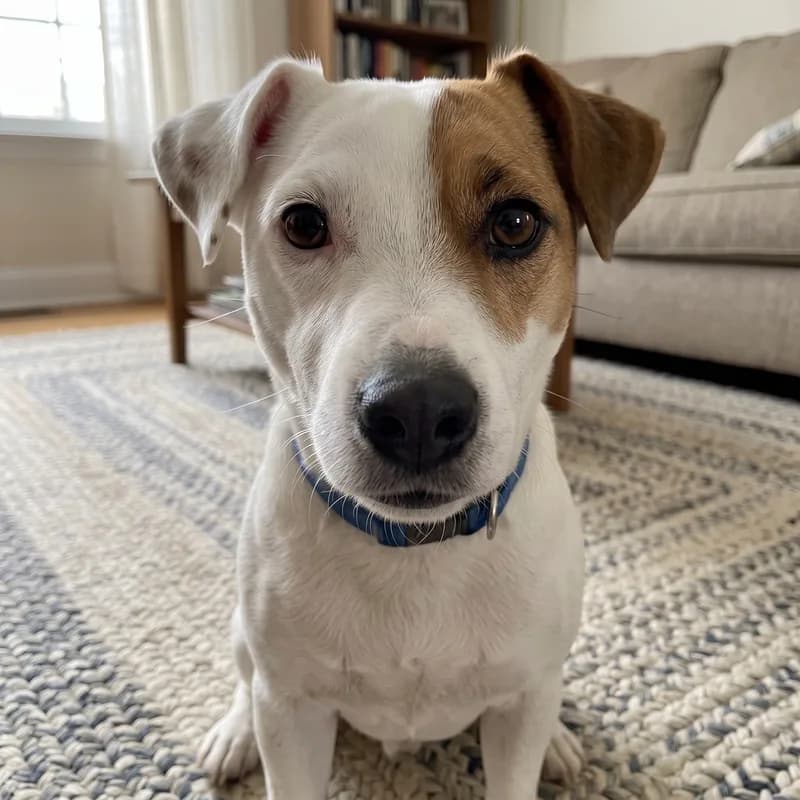
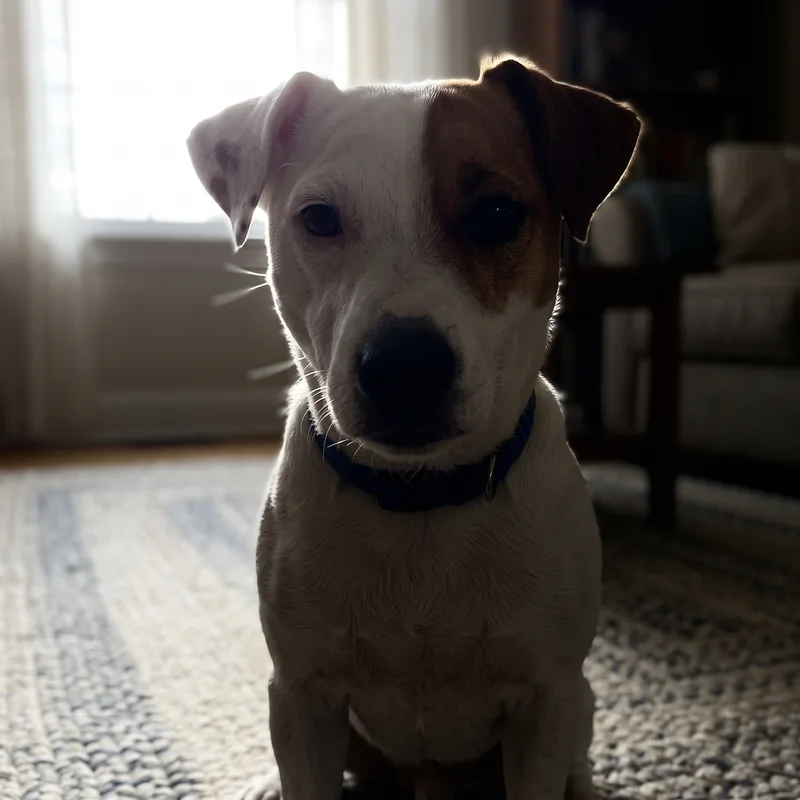
Soft daylight facing your pet's face, the way the first photo here shows, brings out its true colours and a sparkle in the eyes. A photo taken with a bright window behind your pet, like the one beside it, throws the face into shadow. Turn your pet toward the light instead of away from it.
Does the photo need to be perfectly sharp?
Not perfectly, but your pet's eyes should be in focus, the way the first photo here shows. A photo taken mid movement, like the one beside it, blurs the details a portrait needs. Wait for a moment when your pet is still, or take a few photos and send the sharpest one.
How many photos should I send?
One clear photo is enough to start. If you can send more, a useful three looks like this: one close up of the face, one from a different angle, and one of the whole body. That gives us more to work with, without asking you to plan a photoshoot.
What if this is the only photo I have of my pet?
If this is the only photo you have of a pet who has passed, send it, and we will work with it. One photograph is enough on its own. It does not need to be recent, and it does not need to match the examples above. What matters is that it is the one you have.